Noun Clauses / Adjective Adverb And Noun Clauses Pdf Free Download. Remember that a noun names a person, place, thing, or idea. Select the response that best completes the sentence. Read the examples given below. Also called nominal clauses, these dependent clauses can function in a sentence just like any other noun. Nouns can function as subjects, direct objects, indirect objects, object of the preposition, and predicate nominatives.
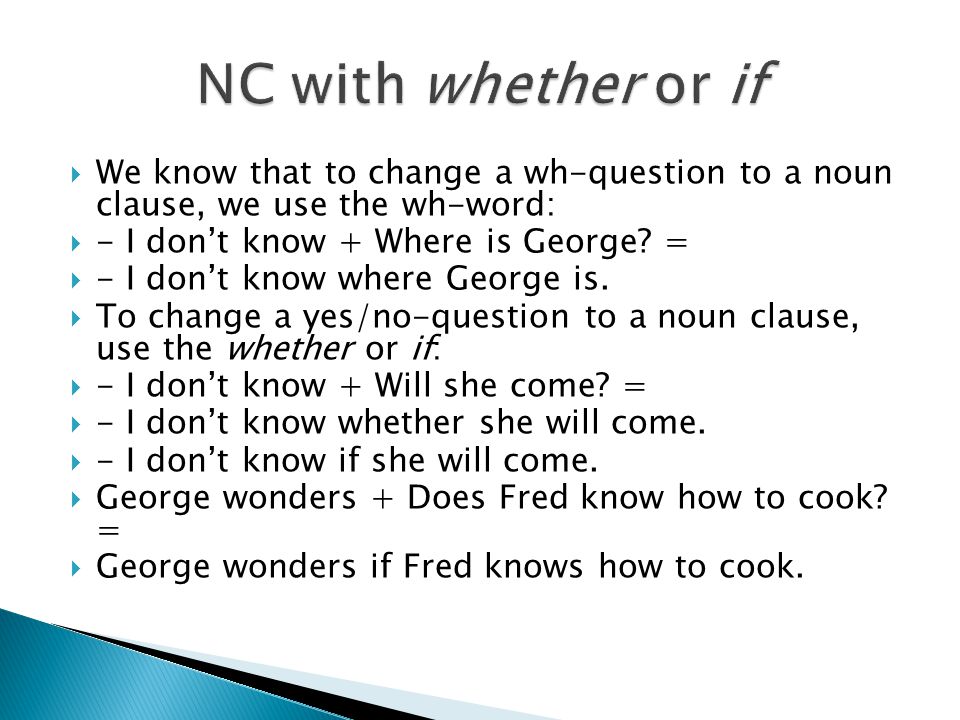
As such, it serves to name a person, place, or thing. A noun clause is a clause that plays the role of a noun in a sentence. What, which, who, whom, whose. Select the response that best completes the sentence. Noun clauses are usually introduced by the subordinating conjunctions that, if and whether.question words like what, how, when etc., can also be used to introduce noun clauses.
Noun Clauses Ppt Video Online Download from slideplayer.com A noun clauseis a dependent (or subordinate clause) that works as a noun. It can also be the object of a preposition. Also known as a nominal clause. A noun clause is a group of words that has the same uses in a sentence as a noun. What she wrote is the subject of the verb is. The noun clause is a clause that functions like a noun in the sentence. A noun clause cannot stand alone because it is not a complete thought. They function as adjectives, adverbs, and nouns using pronouns or subordinating conjunctions.
A noun clause (also called nominal clause ) is a dependent clause that plays the role of a noun.
Noun clauses begin with words such as how, that, what, whatever, when, where, whether, which, whichever, who, whoever, whom, whomever , and. Because of the variety of noun clauses, today i'm only going to try to discuss noun clauses as they are used as objects. It can also act as the object of a preposition. Noun clauses are usually introduced by the subordinating conjunctions that, if and whether.question words like what, how, when etc., can also be used to introduce noun clauses. Remember that clauses can be either dependent or independent. A dependent clause is a phrase that can't stand on its own as a complete sentence. Noun clauses are subordinate clauses that act as nouns. Read the examples given below. The noun clauses answer the question what? Practice for this page subordinate clauses. A noun clause is a dependent clause that contains a subject and a verb. At this point, you can probably guess that a noun clause is a clause that acts as a noun. Like all nouns, the purpose of a noun clause is to name a person, place, thing, or idea.
A noun clause is a group of words that has the same uses in a sentence as a noun. They function as adjectives, adverbs, and nouns using pronouns or subordinating conjunctions. The noun clause is a clause that functions like a noun in the sentence. Moreover, a clause is defined as a unit of grammar that contains at least one verb and a subject. A noun clause is a group of words acting together as a noun.
Noun Clauses Lesson And Resources 6 Sessions By John Dsouza Tpt from ecdn.teacherspayteachers.com Noun clauses have words like; A noun clause has to do with the beta clause, which we also call a dependent or subordinate clause which performs the function of a noun in a sentence or functions like the nominal group. Remember that clauses can be either dependent or independent. A noun clause is a dependent clause that works like a noun. Read the examples given below. It can be the subjectof a sentence, an object, or a complement. Simply put, a noun clause is a dependent clause that takes the place of a noun in the sentence. What she wrote is the subject of the verb is.
Remember that clauses can be either dependent or independent.
Noun clauses are clauses that function as nouns. Practice for this page subordinate clauses. Noun clauses begin with words such as how, that, what, whatever, when, where, whether, which, whichever, who, whoever, whom, whomever , and. If a dependent clause can stand in for a person, place, or thing, then it's a noun clause. A noun clause is a clause that plays the role of a noun in a sentence. What she wrote is the subject of the verb is. A noun clause is a dependent clause that takes the place of any noun in the sentence, whether they are subjects, objects, or subject complements. They can be a subject, subject complement, direct object, indirect object, the object of a preposition, or an appositive. A noun clause is a clause that functions as a noun. It can be used as the subject, direct object, indirect object, object of a preposition, subject complement, or appositive. A noun clauseis a dependent (or subordinate clause) that works as a noun. Because of the variety of noun clauses, today i'm only going to try to discuss noun clauses as they are used as objects. Noun clauses are usually introduced by the subordinating conjunctions that, if and whether.question words like what, how, when etc., can also be used to introduce noun clauses.
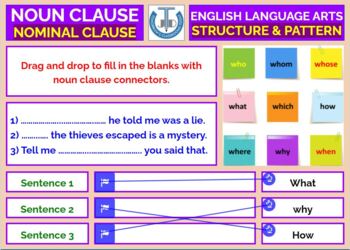
Also called nominal clauses, these dependent clauses can function in a sentence just like any other noun. A noun serves as the subject of the verb in a sentence or it serves as the complement of the verb in a sentence ; It can be used as the subject, direct object, indirect object, object of a preposition, subject complement, or appositive. A noun clause is a dependent clause that acts as a noun. We use who, what, which, whose, whoever, whatever, when, where, why, whether, how and that in noun clauses.
Noun Clauses With Wh Words And If Whether Worksheet from files.liveworksheets.com A noun clause has to do with the beta clause, which we also call a dependent or subordinate clause which performs the function of a noun in a sentence or functions like the nominal group. If a dependent clause can stand in for a person, place, or thing, then it's a noun clause. A noun clause can act as the subject or object of the verb in the main clause. Noun clauses describe something about the verb or the sentence. A noun clause is a clause that plays the role of a noun. What she wrote is the subject of the verb is. Some examples of nouns include, man, house, and car. A noun clause is a dependent clause that takes the place of any noun in the sentence, whether they are subjects, objects, or subject complements.
A noun is a part of speech that names a person, place, or thing.
Subordinate clause quiz (content or noun clause) practice include complex content within a larger structure. The noun clauses answer the question what? Noun clauses are usually introduced by the subordinating conjunctions that, if and whether.question words like what, how, when etc., can also be used to introduce noun clauses. It begins with words such as how, that, what, whatever, when, where, whether, which, whichever, who, whoever, whom, whomever, and why. Like all nouns, the purpose of a noun clause is to name a person, place, thing, or idea. You must choose which flavor of ice cream you want. It must always be paired with an independent (main) clause. Adjective, adverb, and noun clauses contain a subject and a verb. Noun clauses are subordinate clauses that act as nouns. A noun clause is a dependent clause that acts as a noun. Noun clauses are therefore dependent clauses and as subject or object cannot stand alone as a sentence. Nouns can function as subjects, direct objects, indirect objects, object of the preposition, and predicate nominatives. A noun clause is a dependent clause that takes the place of any noun in the sentence, whether they are subjects, objects, or subject complements.